
Polestar’s head office in Sweden has released more detailed plans regarding the arrival of four new models over the next two years. These involve the Polestar models 2, 4, 5 and 7.
In order of impending launch, these details are:
– Polestar 5: A four-door Grand Tourer (GT), the Polestar 5 was first shown in 2025. It is an aluminium bodied sports car with a WLTP range of 678km and, in dual-motor form, up to 650kW of power and a 0-100km/h time of 3.2 seconds. European deliveries will begin around mid-year. Australian deliveries are expected to begin soon after.
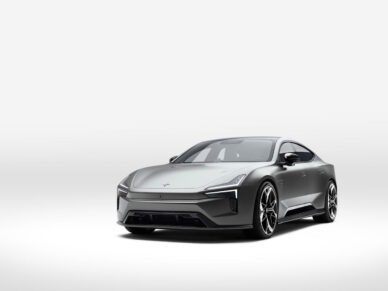
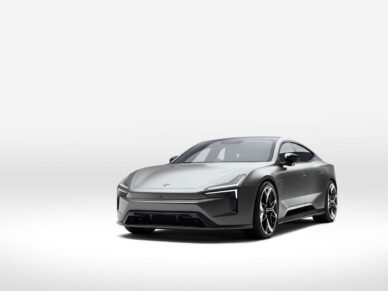
– Polestar 4: This will involve a new variant of Polestar’s current model that according to Polestar will be ‘targeting a wider customer base by offering more versatility’. To be formally launched later this year, European deliveries are expected to start in the fourth quarter of this year. This new variant is described by Polestar CEO, Michael Lohscheller, as “We are combining the space of an estate and the versatility of an SUV with the dynamic performance that is Polestar”. It will be interesting to see if what sounds a station wagon version of the 4 will be of interest to Polestar Australia as a model to bring here.
– Polestar 2: Polestar’s first all-electric car, production began in 2020. That version has had a number of technology and appearance updates since, the latest update of which TheDriven reported on here. However, 2027 will see the launch of a completely new successor bearing the Polestar 2 label.
– Polestar 7: This is described by Polestar as a compact, premium SUV. It is slated for launch in 2028. The Polestar 7 will be Polestar’s first model to be built in Europe (at Volvo’s new manufacturing plant in Slovakia). No formal announcement of the Polestar 7 for Australia has been made yet.
Overall, it seems Polestar is moving from fledgeling brand to finding their feet with a growing range of vehicles, as well as delivering its best year ever in 2025 in terms of worldwide retail sales.
Michael Lohscheller went on to say: “In 2026, with a disciplined approach, the Company expects to deliver low double-digit retail volume growth. The sales mix is expected to continue to evolve with an increasing share of Polestar 4.”
The sad part of Polestar’s approach to model development is, despite their commendable commitment to (and success with) improving environmental outcomes in both production and materials sourcing, it stills appear to be ignoring the elephant in the room.
That being that the best way to do this is to build smaller cars that naturally consume less energy and fewer materials in their construction, as well as use far less energy in their lifetime of use.
No existing Polestar model can be described as ‘small’, and all have significantly sized batteries in cars that are mainly bought and used for local travel.
Perhaps it is time we started to seriously ask, does the world really need more premium medium to large SUVs and sports saloons?


Bryce Gaton is an expert on electric vehicles and contributor for The Driven and Renew Economy. He has been working in the EV sector since 2008 and is currently working as EV electrical safety trainer/supervisor for the University of Melbourne. He also provides support for the EV Transition to business, government and the public through his EV Transition consultancy EVchoice.