
Battery electric vehicle annual sales in Australia surged past 100,000 for the first time in 2025.
Despite a 24.8 per cent slump for market leader Tesla, the BEV market grew 13.1 per cent from 91,292 sales in 2024 to 103,270 in 2025.
In a static market, this grew BEV’s share slightly from 7.4 per cent to 8.3 per cent.
The result resumes a steady growth path for BEVs after stalling to just 4.7 per cent from 2023 to 2024.
But if you consider 17,243 BEVs were sold in 2021, then you can see interest has been steadily increasing.
In fact, if the official VFACTS sales report measured BEV sales as a segment it would be the fifth biggest behind the most popular SUV and light commercial segments.
The record result for BEVs has prompted automotive lobby groups push back against cutting incentives such as the Electric Car Discount.
The federal government has commenced statutory investigation into the future of the policy this year. Written submissions can be made until February 6 here. Findings are expected by mid-2027.
A road user charge for EVs and PHEVs to replace revenue lost from the petrol excise is also on the federal government’s agenda.
The key component of the Electric Car Discount is a fringe benefit tax exemption that can save thousands of dollars on an EV priced below the Luxury Car Tax purchased via novated lease.
As we’ve reported previously, the exemption has reportedly aided the purchase of almost 100,000 vehicles since its introduction in July 2022, including PHEVs, which were eligible until April 1 2025.
However, Treasury estimates the policy will cost $23.4 billion in lost revenues if it continues out to the middle of the next decade.
In a statement accompanying yesterday’s release of annual sales figures, Federal Chamber of Automotive Industries chief executive Tony Weber counselled against the removal of incentives.
“Countries such as Germany, the Netherlands, New Zealand and the United States have seen sharp declines in EV sales when incentives were reduced or removed,” he warned.
“In Australia, remaining support mechanisms such as Fringe Benefits Tax concessions are currently under review. Any policy changes must recognise the clear relationship between incentives and consumer demand, not just vehicle supply.”
Weber also downplayed the impact of the NVES CO2 reduction scheme that was introduced in Australia in 2025 that is designed to gradually strangle ICE and encourage the uptake of BEVs.
“The NVES has provided policy certainty and has led to an increased availability of EVs in Australia. However, it has had little discernible effect on EV demand,” he said.
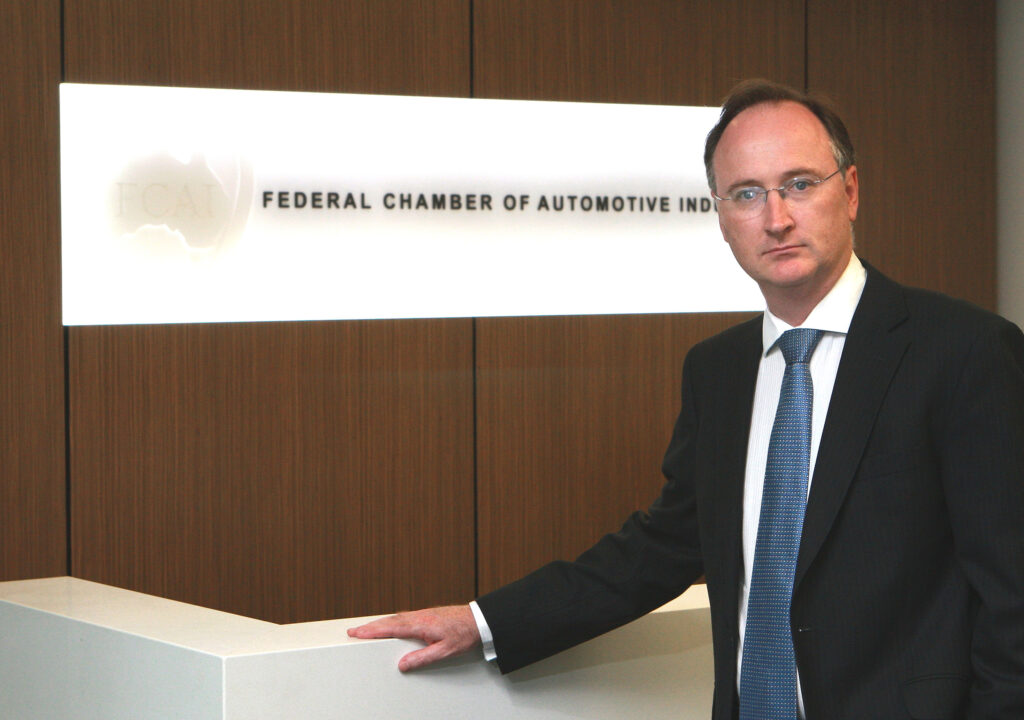
Rohan Martin, the chief executive of the National Automotive Leasing and Salary Packaging Association (NALSPA) also backed the extension of the FBT exemption.
“Without the tax incentive on electric cars, tens of thousands fewer EVs would be on Australian roads today,” he said.
“The Climate Change Authority advises that half of all new cars sold between now and 2035 must be electric to hit even the lower end of Australia’s emissions target.
“This requires an enormous scale-up that cannot happen without continued policy support. Australia simply cannot sell the number of EVs it needs to and reduce vehicle emissions without the sustained support of the FBT exemption and other complimentary measures.”
BEVs weren’t the only electrified powertrain experiencing increased sales in 2025.
Despite the axing of its FBT incentive, PHEV sales recorded the strongest growth of any drivetrain in 2025, with sales more than doubling to 53,484 units, an increase of 130.9 per cent compared with 2024.
Hybrids also continued to gain momentum, with 199,133 vehicles sold, up 15.3 per cent year on year.